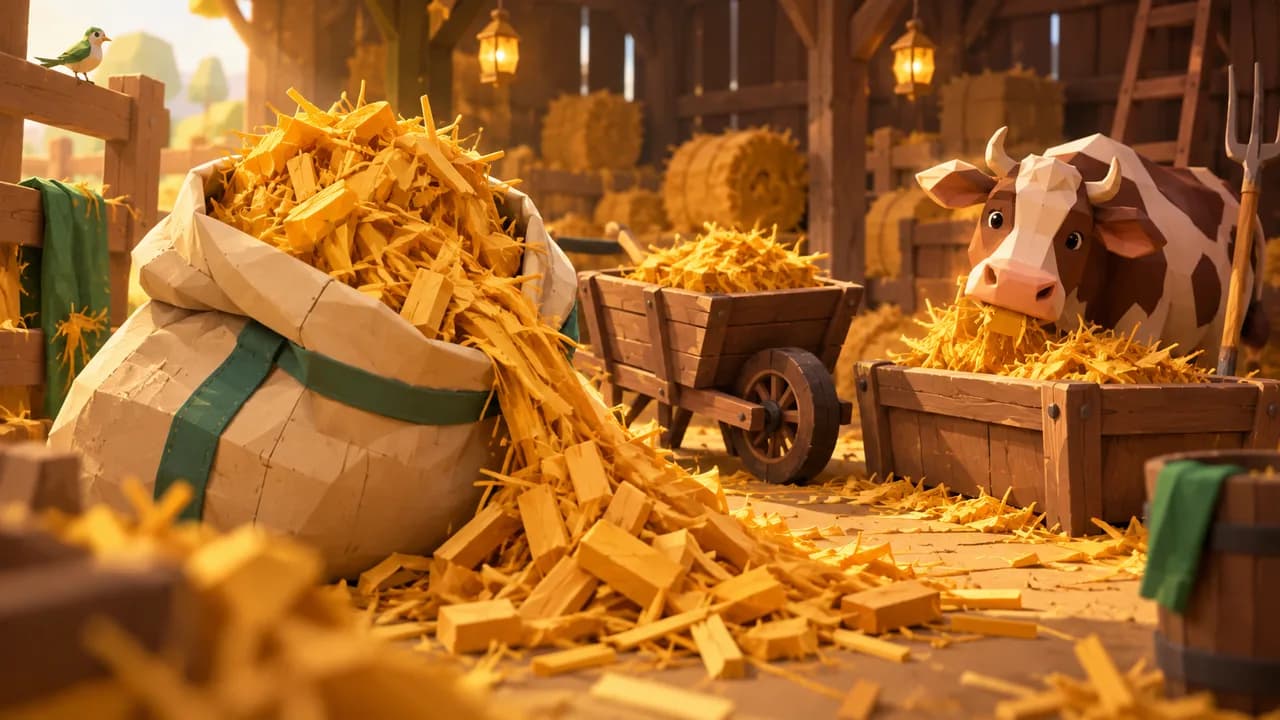
Pitchfork and Dynamite
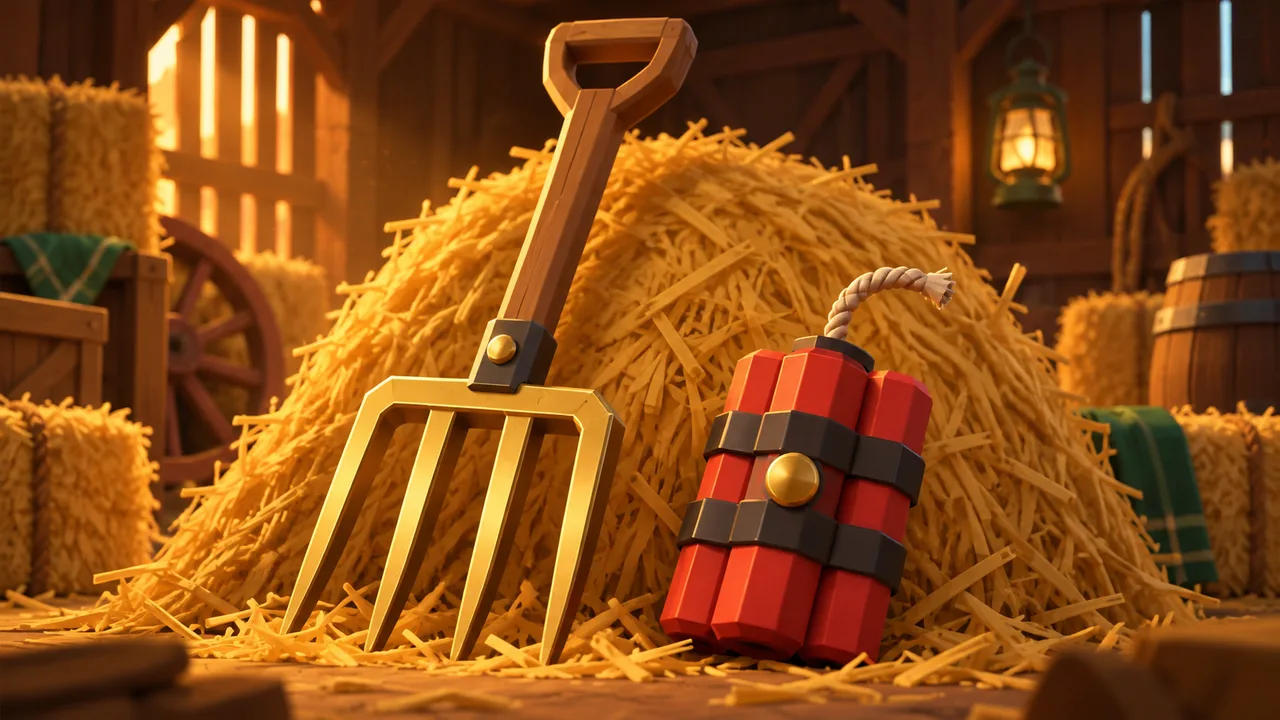
Buy Dynamite first, then the Pitchfork. Dynamite clears wide areas and speeds up your income enough to afford the Pitchfork inside the same run, and the Pitchfork is what you keep upgrading to the finish.
Dynamite's real advantage is not raw speed. Blasted hay lands loose on the ground instead of filling your bag, which removes carry capacity as a limit on how fast you can strip the pile.
The two tools at a glance
| Dynamite | Pitchfork | |
|---|---|---|
| Role | Wide-area clearing | Sustained per-swing clearing |
| When to buy | After Hold, Grasp ×2, Speed ×2 and a bag upgrade | Right after Dynamite |
| Key property | Blasted hay drops loose, bypassing bag capacity | Built to be upgraded repeatedly |
| Supporting class | Demolitionist (7%) | Forkmaster (9%) |
There is a third tool, the Vacuum, but no class buffs it and published advice on whether it is worth unlocking is genuinely split. It is covered at the end of this page.
Why Dynamite comes first
The early game bottleneck is not how fast you remove hay, it is how often you have to stop and walk to the cow because your bag is full. Dynamite is the first purchase that attacks that directly.
Because blasted hay lands loose on the floor, you can clear large sections without constantly worrying about carry capacity. That changes the shape of the run rather than just its pace.
There is a second reason too: Dynamite accelerates income enough that the Pitchfork becomes affordable sooner within the same run, which matters when per-run Cash is capped.
What Demolitionist adds to Dynamite
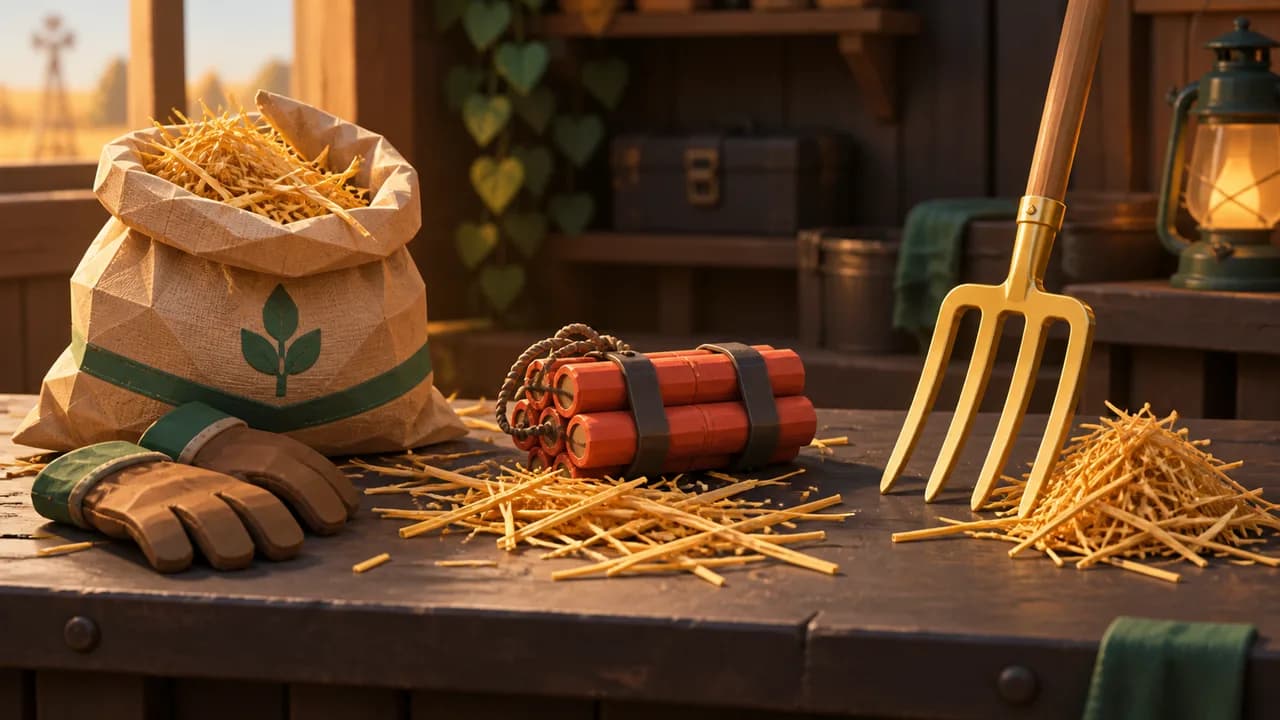
Demolitionist rolls at 7 percent on the class wheel and does two things, both aimed squarely at Dynamite.
- Blast radius increased by 20 percent.
- A 10 percent chance for a charge to split into three mini charges.
A wider blast means more hay per charge, and the split chance occasionally multiplies a single use threefold. Demolitionist sits in the A tier on published rankings largely on the strength of the bag-capacity workaround it amplifies.
Why the Pitchfork is the endgame tool
The standard advice after buying the Pitchfork is to continue upgrading it until you clear the game. It is not a stepping stone to something else — it is the last thing you buy.
Forkmaster, the 9 percent class, is built around that. It gives Pitchfork swings 25 percent more hay and cuts Pitchfork upgrade costs by 25 percent.
The cost reduction is the revealing half. A class that makes one tool's upgrades cheaper only makes sense if that tool is meant to be upgraded many times over, which confirms the Pitchfork as the long-term investment.
The class design tells you the priority
Out of eight classes on the wheel, one is dedicated to buffing the Pitchfork and one to buffing Dynamite. No class buffs the Vacuum, and none buffs hand collection.
That is the developers weighting their own tools. Whatever the Vacuum's merits, the game's permanent progression system is built around these two.
Ultimate Farmer, the 0.1 percent top-tier class, carries every other class bonus at once — meaning it holds both the Dynamite and Pitchfork buffs simultaneously.
The Vacuum disagreement
Both are describing real experiences, and they may simply be describing different stages of the game. TechWiser's context is the Chapter 2 basement dig, where finding a buried key rewards wide-area clearing; Sportskeeda's is a first-run economy where every purchase competes with the next.
We are leaving the disagreement visible rather than picking a winner. The one piece of hard evidence available — no class buffs the Vacuum — leans toward the cautious reading.
What is not published yet
Exact prices, per-level upgrade costs and the underlying radius and yield numbers for both tools are not available from any source we can verify, so this page does not list them.
The percentage figures above are class bonuses, which are visible in game, not tool base stats. We will add a proper cost table once the values can be confirmed in-game and dated to a version.